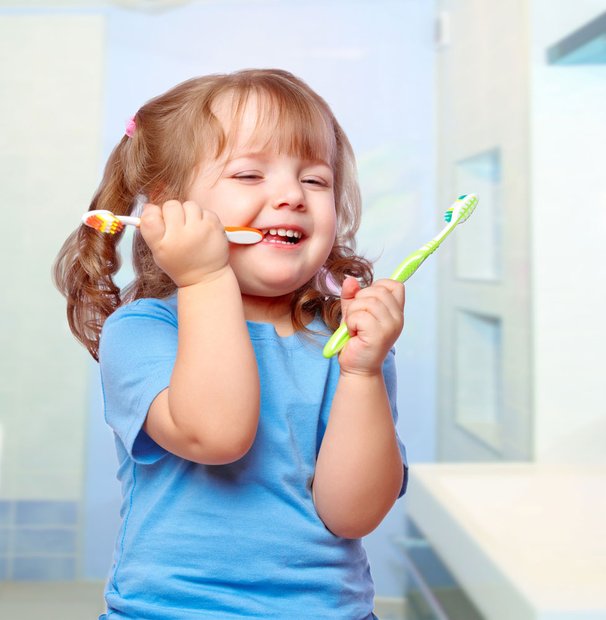
I recently read an article that was published in The Telegraph in June 2017. The article noted new statistics revealing that 80% of children aged between one and two years old hadn’t visited the dentist in the last year, as their parents thought that they were too young. This has resulted in young toddlers needing to have their teeth extracted – something which is entirely preventable.
The latest annual figures show that there were 9,220 tooth extraction procedures performed in hospitals in England on children aged one to four years, and 48 of these cases were infants under one. This is a 24% rise in a decade, and is very disappointing – I feel that these numbers could be reduced significantly if people had better knowledge of what services are available. NHS practices see children free of charge until they are eighteen years old, and even some private practices offer these services for children.
The study shows that parents think that there is no need to look after their children’s baby teeth because they will develop their permanent ones anyway, but as professionals we know it’s not that simple. Getting children to attend the dentist at an early age is essential. We need to show parents that we are here to help. We want to gain the patient’s trust, and this can be done by making sure that they have a positive experience at the practice. I know that no parent wants to hear that their child is not brushing effectively or that they have a poor diet, but we are there to prevent tooth decay from happening or stop it getting any worse, so we need to find ways to approach these awkward topics.
Even though hospitals are amazing at what they do, it can be an overwhelming experience for an infant to have their first treatment in a hospital setting because they need extractions under general anaesthetic. Such experiences are likely to cause them to develop a fear of the dentist at a very early age, and regaining their trust isn’t easy. In the future, they are likely to delay going to the dentist until pain starts occurring.
Working in a busy NHS practice, my team see a lot of expectant and new mothers. Some of these women are already regular attenders, but others are just taking advantage of their maternity card, which makes them eligible for free treatment whilst pregnant and a year after their baby is born. These patients are ideal targets for delivering and reinforcing our message about attendance by children. Providing them with information can be done either in surgery or by the receptionist as the patient arrives for or leaves after their appointment. You could either offer to put their children on the computer system and make them a future dated appointment or advise them to bring their little one with them to their next appointment, just so that they can get use to the smells, the noises and the environment.
It is recommended that children visit the dentist once their first tooth has come through when they are approximately six months old. It’s important that they start attending the dentist at a young age so that we can explain about using a smear of fluoride toothpaste ( no less than 1000ppm) twice a day – once at night and on one other occasion. It is also important to promote healthy food choices such as drinking water rather juice and avoiding sugary foods. These simple instructions can make sure that the patient has the knowledge to provide their little one’s teeth with the best possible start and to ensure that any bad habits don’t develop at an early age.
If you would like to read The Telegraph's article in more detail, click on the following link: http://www.telegraph.co.uk/news/2017/06/08/toddlers-having-teeth-parents-wont-take-dentist/
Thanks for reading my blog.
Bye for now.
Emma Leather RDN, PTTLS, TAQA, OHE
News
Prevention is better than cure.
This saying is so true in relation to dentistry. Giving a patient good oral health advice helps them to maintain a healthy mouth which is free from tooth decay and gum disease.
That’s why I feel it is extremely important to educate people in the importance of having a good oral hygiene regime, and I take pride in doing so.
As I said in a previous article, I love my job as a dental nurse. But every now and then, I take the opportunity to go a little out of my comfort zone and do something different – and this has meant going out into the community and promoting oral health. I have been to visit local schools and scout groups to educate the younger generations on how to maintain a healthy mouth.
To do this, I discuss tooth-brushing technique and diet, and I help the children use disclosing tablets to identify plaque and areas being missed when brushing.
I recently visited a local primary school after being asked by the school to promote oral health to their year one students (ages 5 and 6).
When delivering oral health advice, I used:
A PowerPoint presentation that discussed how plaque can cause tooth decay and gum disease if it is left on teeth. I also added pictures of different foods so that we could discuss diet and sugar intake. The children could look at the different foods and discuss whether they thought the foods (if not eaten in moderation) were good or bad for teeth.
Large dental mouth models with giant toothbrushes so I could demonstrate good tooth-brushing technique and the children could then show me the new skills they had learnt.
Disclosing tablets to help the children identify areas they were missing when brushing. (Consent for this was gained from parents/guardians before the oral health session.)
Posters, leaflets, tooth-brushing charts and toothpaste samples (kindly given to me by our local Colgate rep).
Apart from a few technical problems (the computer) it was great fun – the kids were great!????
The session went well and the children were keen to participate and learn new skills. They loved the mouth models and giant toothbrushes.
We played a game to see how long the children thought two minutes lasted (the length of time they should be brushing). The children had to stand up once they thought two minutes had gone, and nearly all the children had stood up before a minute had passed. So, I recommended listening to their favourite pop song whilst brushing to help them ensure they are brushing for the correct amount of time, or asking their mum or dad if they could get a tooth-brushing app which lets them know when they have brushed for the correct amount of time and often has a funky tune to brush along to.
To finish the session, I helped the children disclose their teeth, which showed them the areas they were missing when brushing. The children were then given the opportunity to brush their teeth whilst getting individual oral health advice to meet their needs.
Disclosing is a fun way to help the children identify areas they are missing, and I think they really enjoyed it. I’m pleased to say that the disclosing went well – with no stained uniforms or faces – and I think only one child swallowed most of a disclosing tablet although they promised they had chewed it.
As I have children at the school, I received loads of positive feedback from the other parents, including:
Their child had insisted that they needed to clean their teeth for two minutes.
Their child had mentioned the importance of brushing twice daily.
One child had told her mum that eating too much sugar is bad for your teeth.
Receiving positive feedback makes it all worthwhile. So, I would recommend to all dental nurses going out in the community and educating people on the importance of good oral health – whether it be in schools, groups, nursing homes etc.
I feel it is important to set myself new challenges, and what better way to do so – helping others, teaching people new skills and giving them the tools to maintain a healthy mouth.
As most of us will by now be aware, the General Dental Council (GDC) is set to change the requirements for Continued Professional Development (CPD). These changes will come into effect from 1st January 2018 for dentists and from 1st August 2018 for DCPs.
The new requirements are called the ‘Enhanced CPD Scheme’. The idea is to ensure that CPD is undertaken regularly by GDC registrants and that it is relevant to each different group’s GDC Scope of Practice.
The scheme is based solely on verifiable CPD – this is considered to be activities/training which are quality controlled with, ideally, educational aims and outcomes as well as the opportunity for the attendees to provide feedback.
There will be no non-verifiable CPD requirements, and the hours required per cycle have been adapted to reflect this change. The new CPD requirement for dental nurses is a minimum of 50 hours per 5-year CPD cycle.
Registrants are expected to carry out the following steps in order to complete their CPD:
Plan: Identify CPD needs from your Personal Development Plan. This can be done individually or with colleagues and the wider dental team, or it can be done with employers via appraisals. Feedback from patients, complaints, audits and other events may be taken into account.
Do: Having identified their needs, the registrant is expected to undertake the activity/training in a timely fashion.
Reflect: Having completed the CPD activity/training, the registrant is expected to reflect on its impact and consider how it has allowed them to maintain or develop their knowledge, thereby complying with Standard 7 of the GDC Standards for the Dental Team.
Record: A complete record needs to be kept of the CPD activity/training, including any certificates or other evidence as well as your reflective account. From this, any further CPD needs can be assessed and added to the Personal Development Plan.
CPD records should be kept for 10 years, as the GDC will carry out random audits of registrants’ CPD completion each year and may call for your log up to 5 years after a cycle has been completed.
As some dental nurses may be in the middle of a 5-year CPD cycle when these changes come into force, it is important to ensure you calculate the remaining number of hours required to remain compliant. To achieve this, you simply need to subtract the number of VERIFIABLE CPD hours you have already logged from the new requirement (50 hours). This will give you the remaining number of hours required.
However, do be aware that you are not allowed to log 0 hours CPD for 2 consecutive years. This means you may need to add hours to prevent this occurring, even if it means you log more than the required 50-hour minimum for a 5-year cycle.
Further information about the new CPD requirements can be found on the GDC website:
The countdown is now on for National Smile Month 2017.
For those who are unsure what National Smile Month is, it’s the largest and longest-running UK campaign to promote good oral health. The campaign last for a whole month, so there is still lots of time for you and your practice to get involved. This year, the campaign is running from 15th May to 15th June, so put these dates in your diary.
The purpose of the campaign is to promote, educate and engage local communities by highlighting three key points:
1. Brush your teeth last thing at night and on at least one other occasion with a fluoride toothpaste.
2. Cut down on how often you have sugary foods and drinks.
3. Visit your dentist regularly, as often as they recommend.
These three points are so important. Studies show that having poor oral health isn’t just about having problems inside the mouth. A smile can have a huge impact on a person’s self-confidence, personality and success.
Unfortunately, it seems that many people are not buying new dental products for financial reasons. But a new toothbrush, floss/TePes and fluoride toothpaste don’t have to be expensive. And it’s our job to make sure that people know how to use their toothbrush and floss effectively.
Making parents/grandparents and carers aware of the amount of sugar that is in our everyday products is essential. Research shows that four- to ten-year-olds consume 15% of their daily calorie allowance in sugar alone – so imparting relevant knowledge and skills to other professions is vital.
Finally, it is an unfortunate fact that roughly 40% of children still do not visit the dentist each year. This figure is outrageous, but we need to get the message across to them even if we are not seeing them in practice.
There are many different ways that you can go about raising this awareness:
You could put a poster, leaflet or display in your practice. This could display how much sugar is in different foods and drinks, or could be about effective tooth-brushing.
You could ask your local library if they can do a display of any books that they stock which are about visiting the dentist.
You could visit your local schools, play groups or nurseries to promote good oral hygiene.
If you are already an oral health educator, you could ask if you can do extra sessions.
You could have a practice meeting to discuss this issue amongst your team.
For more information about National Smile Month, visit the campaign’s website at: http://www.nationalsmilemonth.org/
This is an amazing website – it has lots of great facts and information about the campaign.
If you enjoy promoting good oral health, why not consider joining our oral health education course? It starts in June and takes nine months to complete, so you will qualify just before the next National Smile Month campaign in 2018. This will help you make a difference to your patients’ oral hygiene and to the people around you.
Emma Leather RDN, PTLLS, TAQA, OHE
News
There are numerous post-qualification options available to dental nurses, one of which is the Oral Health Education qualification. This is a great qualification to undertake, and it can increase the value to patients of attending your practice.
This article discusses some of the things an oral health educator can do to promote both their practice and good oral health. There are many possible approaches, and these will vary with individual nurses and practices – so do not limit yourself to the ideas suggested here. Achieving this qualification offers dental nurses a chance to be creative, both in the methods and resources they use to teach patients and in the ways they choose to get good oral hygiene messages across to their patients.
The Oral Health Educator and Direct Access
First, let's discuss what direct access is. According to the General Dental Council (GDC) (2017):
'Direct access’ means giving patients the option to see a dental care professional (DCP) without having to see a dentist first and without a prescription from a dentist.
So what does this mean for an oral health educator? The GDC puts this quite simply, stating that dental nurses can take part in: ‘preventative programmes without the patient having to see a dentist first’ (GDC, 2017). However, you must still work within your scope of practice and only carry out treatment for which you are "trained and competent" (GDC, 2017). Although many dental nurses are likely to feel confident in delivering oral health education to their patients, it is therefore preferable to have extra training in this area to develop your own understanding of oral health messages and ways to deliver them. The oral health educator course will equip registered dental nurses with this information, helping them to carry out this work to the best of their ability. The course builds on the knowledge that dental nurses gain through their initial qualification, deepening their knowledge and understanding of dental disease and preventative measures. The course offers practical ideas on how to pass information to our patients, and it also touches on psychology and behaviour change. It is important when adopting a teaching role that we understand something of behaviour change so that we can help our patients to adopt new ideas and techniques. I am currently undertaking a teaching course and have developed my understanding of this area greatly. This has had a positive impact on the ways I think about communicating oral health messages. You will know yourself that there are different learning styles, so it is important to develop resources which will engage your patients.
So how can direct access help patients? Some patients may be too anxious to attend appointments with a dentist, and seeing an oral health educator first may help them build their confidence in the dental chair so that they are able to book further dental appointments for treatment. Oral health educators could also go out into their local communities and take their oral health messages to members of the public rather than only delivering those messages to patients at the practice. We could visit local schools and community and activity groups to do this. As we will be better-trained in promoting oral health messages, we could also design posters or leaflets to be distributed to these places and possibly to local magazines or newspapers.
For more information on direct access, visit the GDC website at: https://archive.gdc-uk.org/Dentalprofessionals/Standards/Pages/directaccessqas.aspx
For more information on your scope of practice, visit the GDC website at: https://archive.gdc-uk.org/Newsandpublications/Publications/Publications/Scope%20of%20Practice%20September%202013.pdf
Being Involved in Oral Health Days
Dental nurses and oral health educators should be aware of oral health campaigns throughout the year. These include World Oral Health Day, National Smile Month, Stoptober, and Oral Cancer Action Month. These campaigns help to educate patients in how to take care of their own mouths, and they also provide messages promoting good oral health. Why should we get involved? Put simply, we should all share the aims of these campaigns. We should want to improve the oral health of our patients (and of the general public) where possible. I have discussed all these events in more detail in a previous article, which also included ways that your practice can be involved and promote them. This, however, is not limited to just the dental practice. You can take messages out into your local community, as discussed above.
Do you have regular staff meetings? If you do, adding oral health days to the agenda can bring your team together to discuss ideas of how to be involved. If you are the person with sole responsibility for making the arrangements, it gives you a way to communicate your plans to the whole practice team so that everybody is aware what is happening, how to support you, and what they can do to help.
Are there any barriers to being involved? There are often barriers to the things we want to do, but that does not mean that we should not make suggestions and try. When I have tried to go ahead with ideas to promote oral health days in the past, I have met barriers. The biggest is often having an unwilling practice owner or practice manager. They can reject ideas of posters or displays and leaflets as they do not want their waiting rooms to look untidy. A way of overcoming this could be to present them with different options and designs. These, again, can be discussed at staff meetings, and the whole team can input their ideas. If a waiting room display is definitely not an option, you could try and design goody bags for your patients which can be stored discreetly in surgeries or behind the reception desk. Leaflets and promotional materials for the campaign can be given to patients in this way, along with other items of your choosing. Some of the campaigns have online shops, so you could include their items but adapt what you offer to fit in with your own brand. Remember to discuss your ideas with the whole team – if more people are willing to be involved, your ideas are more likely to be considered.
Benefits of Having an Oral Health Educator
So how could having an oral health educator benefit your practice? There are many ways this is possible. If you are attempting to convince your principal dentist to support you in undertaking the oral health education qualification, it can help to show how an oral health educator can increase the income of the practice. An appointment with an oral health educator could be a chargeable appointment, bringing more income to your practice in itself. Oral hygiene aids are likely to be recommended at these appointments, and so sales of these will increase – most patients will buy recommended products from the practice rather than risk looking elsewhere and being unable to find them or buying the wrong items. The oral health educator would also be able to promote treatment options available at the practice and increase income in that way. I often find myself advising patients to book for examination appointments or visits to the hygienist. I like to keep my sessions relaxed and informal, and this can provide patients with an opportunity to discuss matters they do not feel they have time to discuss with their dentist or treatments you offer that they are not aware of. For example, they may tell you that they are unhappy with the shade of their teeth or the margins of an old crown but have not felt they had time to discus this with their dentist. You can then have a conversation about the options that may be available to them to help them feel happier and more confident with their smile.
An oral health educator can add value for existing patients as well as new patients, building rapport with them and helping them to feel cared-for and looked after. Appointments with an oral health educator can help to create space in dentists’ and hygienists’ appointment books, allowing them more time to see other patients.
Helping Patients with Periodontal Disease
In my current practice, we have a specialist periodontist. This means that a large number of patients registered with us have periodontal disease. So what is the role of the oral health educator here? Before our patients are offered treatment for their periodontal disease, we must ensure their oral hygiene routine is carried out effectively at home. In my practice, we aim for a patient’s plaque score to be under 20% before carrying out periodontal treatment. There are reasons that a patient may not be able to achieve this, and these patients are not denied treatment but are made aware that having a plaque score of under 20% helps their treatment to be more successful and effective. Most commonly, periodontal treatment consists of two appointments for a course of root surface debridement under local anaesthetic, with periodontal surgery being offered at a later date if required. Prior to their root surface debridement appointments, patients attend two appointments which focus on oral hygiene instruction. Currently, my practice is extremely busy, and we are unable to offer regular oral health education appointments, so patients see the hygienist for these initial appointments. Ideally, all periodontal patients would be offered appointments with me as an oral health educator instead. As an oral health educator, I can speak to them about what their current oral hygiene routine is and help them to improve it. Patients are asked to bring their own oral hygiene aids to these appointments to aid this. The most common things I see are patients using very small interdental brushes in spaces where a larger brush is required. I often see patients using red or pink brushes, and I move them on to the very large sizes such as purple or grey. When patients bring in their own toothbrushes, the bristles are often splayed and the brushes are ready for replacing. This occurs with both electric and manual toothbrushes. An alarming number of patients have never been shown how to care for their mouths, and so providing advice and demonstrations tailored to their needs can make a great difference. Patients are often unaware of how much control they can have over the progression of their disease, and so it is vital for us to communicate with them that we are aiming for their plaque score to be under 20% to help the treatment we carry out to be successful. We also need to stress to patients that this must continue after they have had periodontal treatment to keep the disease from progressing.
Effective oral hygiene methods are key to helping patients with periodontal disease, and teaching patients how to clean their mouths is something many dentists simply do not have the time for. Supporting a registered dental nurse through the oral health educator course is a simple way they can help their patients without taking time out from their regular appointments.
Helping Patients with Implant Restorations
In my current practice, we also offer implant restorations. We are primarily an implant practice, and so our treatment options here range from a single implant with a crown through to implant retained dentures or to full upper and lower arch implant restorations. Excellent oral hygiene is vital to patients with implant restorations, and we discuss this with all our patients before they make a decision about having treatment. Ideally, all implant patients should see a hygienist before their implant surgery to ensure their mouth is clean and their oral hygiene routine is effective. Patients should also be seen once their restoration has been completed to ensure they know how to clean it. The complexity of cleaning their new restoration will depend on the complexity of their restoration and will often include the use of new oral hygiene aids they are not aware of. It may be preferable for larger cases still to be seen by a hygienist, but smaller cases need not take up space in their appointment book. There are two hygienists working in my practice at present, and both are always fully booked quite far in advance. If you find this in your own practice, you should be able to point out to your practice manager how beneficial it would be to have an oral health educator seeing some of these patients. When you first begin seeing patients with implant restorations, try to spend some time with the hygienist so that you can see what advice they offer and what cleaning aids they recommend. From what I recall from my oral health education course, there was not much discussion about cleaning implant restorations, so work with your hygienist to make sure you are offering correct advice. In the past, I have seen patients who have not cleaned their implants because they did not know they needed to – this can lead to serious problems with implants, including the treatment being unsuccessful and the patient losing their implant(s). Most patients in my practice who attend for implant restorations have more than one implant, so suitable products need to be recommended. Many of our patients use Superfloss, which is manufactured by Oral B. You are highly likely to be aware of this product. A newer product, X-Floss, is also available (in two different sizes). It is similar to Superfloss, but we have found that some of our patients find it easier to use. Superfloss has a pointed end so it can be threaded into spaces such as underneath a pontic for a bridge. We have found that the pointed end on the X-Floss is slightly stiffer and so can be easier to thread into these spaces. A product we sometimes recommend to use around implant restorations is called an implant brush. Manufactured by TePe, this is a manual toothbrush which has a few bristles horizontally across the brush, making cleaning lingual and palatal surfaces easier. We do not recommend this brush to all our patients with implants, but some do find that it makes cleaning these surfaces easier. Interdental brushes are recommended for use in the same way as they would be used around natural teeth, but it is always worth checking which size is best around a new restoration, as the interdental spaces can change.
Dental nurses who take the oral health education qualification can make a real difference to the oral health of the patients within their practices. There are many reasons this is a good qualification to have. It can benefit both patients and the practice and can increase job satisfaction for the dental nurse. The qualification and delivering effective oral hygiene messages relies on the oral health educator having excellent communication skills, so it is essential that a dental nurse is a good communicator. Dental nurses who can help patients feel relaxed and at ease will enjoy carrying out this job role. As I said at the beginning of this article, allow yourself to be creative, and enjoy working with your patients if you choose to undertake the oral health education course.
Author: Katie Booth RDN, OHE, CTLLS
References
GDC. (2017). Direct Access Q&As. Available at: https://archive.gdc-uk.org/Dentalprofessionals/Standards/Pages/directaccessqas.aspx (accessed on 21/1/17).


 I recently read an article that was published in The Telegraph in June 2017. The article noted new statistics revealing that 80% of children aged between one and two years old hadn’t visited the dentist in the last year, as their parents thought that they were too young. This has resulted in young toddlers needing to have their teeth extracted – something which is entirely preventable.