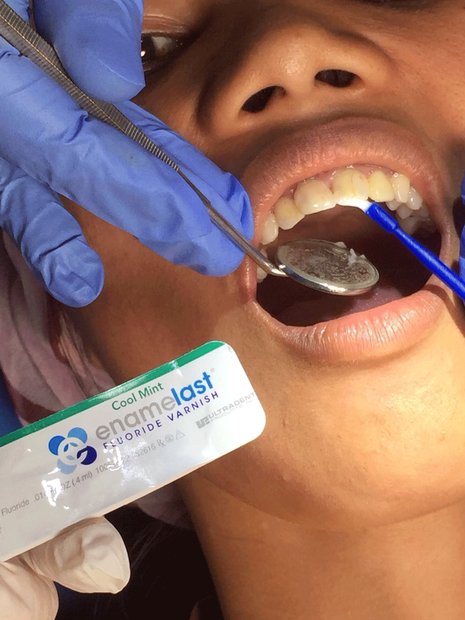
Hundreds of children living in poor and remote communities in Cambodia will have healthier teeth thanks to Optident and volunteers working with the international dental charity Dentaid.
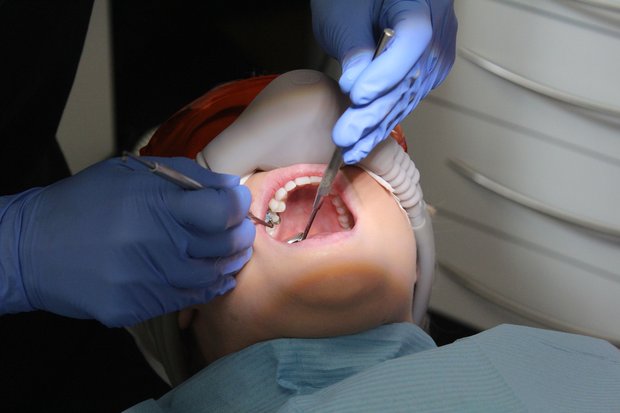
Optident and Ultradent donated 2,000 units of fluoride varnish for Dentaid to use on its projects around the world. The first batch was sent to Cambodia where volunteers visited slum areas near the capital Phnom Penh and community clinics in Kampong Cham. In addition to providing emergency dental treatment for people in pain, the team also ran oral health education sessions, screening and fluoride varnish programmes. The easy availability of fizzy drinks and sweets has led to widespread dental decay but many Cambodians can’t afford basic dental care. Over two weeks the team treated more than 350 people and they also supported Cambodian dental professionals who are working to improve access to dental care in the country.
The donations of fluoride varnish will also prove invaluable in Dentaid’s work in Uganda, Morocco and the refugee camps in Greece where fluoride varnish treatments are offered alongside emergency dental care and oral health advice. A Dentaid team heading to Uganda in February is expected to see more than 1,000 patients in schools, prisons, orphanages and community clinics and the charity is also working with Ugandan dentists to establish dental clinics in refugee camps on the northern Ugandan border where people have fled from South Sudan. Some of the donated fluoride is being also used for Dentaid’s projects providing dental care for vulnerable and homeless people in the UK.
“We are extremely grateful to both Optident and Ultradent for this valuable donation of fluoride varnish which mean our volunteers and partner dentists will be able to protect thousands of teeth,” said Dentaid’s overseas projects manager Jacqueline James. “Dentaid works in many of the poorest and most remote parts of the world where access to dental care is extremely limited. Therefore, protecting children’s teeth and educating them about oral health is very important.”
Marketing coordinator for Optident Maria Brophy added: “We are proud to donate 2000 units of the popular Enamelast Fluoride Varnish. This will go a small way to help Dentaid’s mission providing much needed dental care for vulnerable communities globally. As both Optident and Ultradent pride themselves on enabling dentists to provide the best level of dental care for patients, our contact with Dentaid is a humble reminder that many people have no access to the most basic dental care. It is a privilege to contribute to an organisation that strives to help those most in need, and we are impressed with the enthusiasm and dedication Dentaid bring to their wide ranging initiatives.”
News
Hi Everyone,
My name is Emma, and I’m one of the tutors here at Dental Nurse Network. We offer e-learning courses ranging from impression-taking to introduction to management. All our courses are designed to ensure that every student receives all the information they need in order to gain competence in the subject that they are studying.
What is e-learning?
For those who have never done an e-learning course before, e-learning basically means that you are able to complete all the theory aspects of a course online instead of travelling to a venue. All the information that is given to you is the same as for a classroom-based course; the only difference is that e-learning courses are delivered through online tutorials. You can still sit and listen to all the information, and you can print the course slides if you wish to.
E-learning is becoming a very popular way to learn nowadays, as it has many benefits – you don’t need to take time off work, and you can re-watch the tutorials as many times as you like whilst you are completing the course. The tutorials are also good to refer back to when you are finalising your Record Of Experience (ROE) in your workplace. You will have an allocated tutor to offer help and support throughout the course. You can study in your own time and wherever you like. The course is accessible nationwide, so it doesn’t matter where you are in the UK – you will be able to gain another qualification to help boost your career, develop a new skill and build your confidence.
What we can offer you
Each of the online tutorials is broken down into manageable sections. We have done this to cater for everyone’s individual needs and to help you fit your studies into a busy life. Some webinars are pre-recorded, whilst others are live, so nurses can all get involved and ask any questions if they are stuck on anything.
Our e-learning courses
NEBDN Certificate in Oral Health Education - Six-month course - £525.00LEARN MORE
Certificate in Impression-Taking - Three-month course - £90.00LEARN MORE
Certificate in Fluoride Varnish Application - Three-month course - £90.00LEARN MORE
Certificate in Plaque Indices - Three-month course - £70.00LEARN MORE
Certificate in Practice Management - Three-month course - £80.00LEARN MORE
Certificate in Dental Reception- Three-month course - £80.00LEARN MORE
Any other questions?
If you have a question about any of our courses or would like more information, I have included all our contact details below – I will be happy to help.
You can e-mail me: This email address is being protected from spambots. You need JavaScript enabled to view it.
You can telephone us on 020 7193 0584 between 8.30am and 5.30pm Monday to Friday.
Whilst you are on the website, feel free to complete your free hour of CPD here. Please also ‘like’ and ‘follow’ our Facebook page so that you can find out about future course dates and see feedback from previous learners.
I will look forward to hearing from you soon.
Emma
News
Throughout the whole of November, the Oral Health Foundation is running a campaign to raise awareness of oral cancer. The aim is to get as many people as possible involved so that the general public are aware of the early signs and symptoms of oral cancer – early diagnosis is vital for successful treatment. Raising awareness of how amending lifestyles choices can reduce the chance of developing the disease in the first place is also important.
I personally feel that oral cancer doesn’t get the same publicity as other cancers, even though mouth cancer sadly takes the lives of more than 2,000 people each year in the UK –more than testicular and cervical cancer combined. Unfortunately, recent studies in the UK show that more than 7,500 people were diagnosed with mouth cancer last year. The disease has grown by a third in the last decade and remains one of very few cancers that are predicted to increase further in the years to come.
Risk factors
The highest risk category used to be men aged forty years and over, but younger people, both men and women, are also now being affected. The main risk factors for oral cancer are lifestyle choices such as smoking, alcohol and poor diet.
Smokers are six times more likely to develop oral cancer than non-smokers. Studies show that 75% of mouth and throat cancers have occurred in tobacco users. This will include people who do not necessarily smoke, but who chew tobacco.
Up to half of all mouth cancers are partly due to poor diet such as an insufficient fruit and vegetable intake.
Consumption of alcohol is another major risk factor.
Signs and symptoms
Within dentistry, the main things we are looking for are changes to both the inside and outside of the oral cavity. Oral cancer can affect the lips, tongue, cheeks and throat, so it’s important that people look for the following signs and symptoms:
An ulcer in the mouth that doesn’t heal after about three weeks.
An abnormal-looking patch – either white or red in appearance. Such patches could be a sign of cancer or precancerous changes. They are not cancer, but if left untreated, they may lead to cancer.
Any unusual lumps or swellings. These can be on the lips, in the mouth or in the throat.
Preventative measures – advice to give to patients
When it comes to oral cancer, it’s important that patients visit the dentist regularly, as all dentists will check for any changes inside and outside the oral cavity that haven’t been discussed/seen before. This applies even if the patient is a denture wearer.
When completing the medical history form, it is important for patients to be as honest as possible so that the dentist is aware of any changes. Suitable advice can then be given, particularly to high-risk patients.
Government guidelines for both men and women advise individuals to consume no more than fourteen units of alcohol per week.
Following the Eatwell guide will help to ensure patients are consuming a well-balanced diet that contains all the vital food groups. It can be found here: https://www.nhs.uk/Livewell/Goodfood/Pages/the-eatwell-guide.aspx
Patients should try to stop smoking or avoid smoking as much as possible. There are many support groups if they need more information, or they can visit their doctor or local pharmacy.
When brushing their teeth, patients should look out for any changes in the mouth.
Patients should make sure that they use suitable protection if they are in the sun.
For more information, please visit the following websites:
There are many qualifications that dental nurses can work towards after they have gained their initial dental nursing qualifications, and it is worth considering how we can put these to good use within the dental practice.
In the busy dental practices we see today, it is important for dentists and practice managers to realise the value of a well-trained team and be able to ensure staff reach their full potential. I feel that compulsory registration with the General Dental Council (GDC) has led to many dental nurses wanting to take on extra responsibility – both for patient care and for more 'behind the scenes' roles. Additional qualifications and duties can include (but are not limited to):
Oral Health Education
Oral Health Promotion
Fluoride Application
Radiography
Sedation
Impression-Taking
Clinical Photography
Suture Removal.
In my practice, our nursing team has all these additional skills, and they are put to good use. This helps the clinicians' appointment books run more smoothly; it takes some work out of their appointment books completely, leaving them more time to treat other patients. Dental practices today seem to constantly get busier, so being able to save time where we can is extremely helpful. I have worked in my current practice for six years and have seen the workload increase greatly in that time. Having well-trained dental nurses who can carry some of the workload makes a real difference in the way the practice can run. An excellent standard of training is vital to ensure dental nurses are confident in carrying out their extended duties safely for the patient and to the best of their ability. My practice has an academy side to the business, training dentists and providing Continuing Professional Development (CPD). As I have recently qualified as a teacher, I am beginning to work with our practice manager and academy to create effective training and CPD for the wider dental team.
Oral Health Education
Generally, in my experience, dentists are terrible at providing patients with oral health education! It is often something they add to the end of an appointment and spend little time on. Placing such little emphasis on it can mean that the patient does not see its importance and therefore will be less likely to carry out any instruction given. At my practice, we feel that oral hygiene instruction should ideally be given when providing patients with a new restoration. This can be one or multiple crowns, bridges, dentures, and implant restorations. If oral hygiene is given immediately after fitting a large restoration, a patient can often be too excited about leaving with their finished restoration to be paying much attention to the advice being given. Similarly, anxious patients may be too keen to get out of the dental chair and leave to be listening to this advice. Booking a further appointment with a dental nurse qualified in oral health education can therefore be extremely helpful. The patient will have started to get used to their new restoration and will be more interested in the aftercare advice given. Anxious patients are often more at ease around a dental nurse than a dentist and so are more likely to be able to take on board this advice. Furthermore, many patients are more honest with a dental nurse than a dentist and may voice problems or concerns they would not have brought to the dentist's attention. If the appointment is booked shortly after the restoration fit, the patient will have had time to talk and eat with their restoration in place, and this can also be an opportunity to discuss how this has felt and any improvements that could be made.
Often, oral hygiene instruction is given verbally by dentists, without any visual demonstration. Patients can then easily misunderstand what they should be doing. An oral health educator can take the time to demonstrate oral hygiene aids and how to use them effectively. These can then be tailored to the individual patient's needs. This may be preferable to the 'one size fits all' approach that many dentists seem to demonstrate.
With regard to dietary advice, this can be something dentists simply do not have time to address. An oral health educator is often able to spend more time on this with patients, helping them to develop their own knowledge and therefore be able to make healthier choices by themselves when not in the practice. Sometimes, particularly with children, more than one appointment is necessary to reinforce these messages and to ensure that they are fully understood. Again, many dentists simply do not have time to teach patients how to choose a good diet effectively. If your practice offers orthodontic treatment, the role an oral health educator can play throughout treatment is obvious, particularly with the culture of fizzy drinks most children are familiar with.
Oral Health Promotion
Before I gained my oral health education qualification, I completed a short qualification in oral health promotion. I found this extremely useful, and it challenged my knowledge in areas such as how socio-economic differences can affect oral health. Although not as in-depth as the oral health education course, I did feel it improved my communication skills. It is a useful course for any dental nurses considering creating their own resources and literature – such as posters and leaflets – for patients. These can then be used by dental nurses in their clinics where suitable, and can also be taken away by patients for use at home.
Fluoride Application
Fluoride application is most often seen in the appointment book of a dental hygienist, but it is sometimes booked with a dental therapist and occasionally with a dentist. I have recently seen an appointment with one of our general dentists for this. It is easy to see that with dental nurses available to undertake fluoride application, all three of these types of clinician could be carrying out work that is helping patients out of pain, more complex treatments, or treatments of a higher financial value. All of these things are important to a practice. Another advantage of having dental nurses able to carry out fluoride application is that children attending for this type of appointment may be more cooperative with a dental nurse than a dentist, as they may not feel as anxious around them. This can then help build the child's confidence in the dental chair and help them to find any future treatment easier.
Radiography
A very popular additional qualification for dental nurses is the dental radiography for dental care professionals (DCPs) qualification. In my practice, all dental nurses are expected to already have, or be willing to work towards gaining, this qualification. We use these skills on a daily basis. We require radiographs for almost all our new patients at their initial consultation appointment, and often our dental nurses take these along with a set of clinical photographs (discussed later) before the dentist sees the patient. As we are a specialist practice, primarily seeing patients who are referred from their general dentists, we can often assess what radiographic views are required before we see the patient. The fact that our dental nurses are able to do this at the start of an appointment means that all the required information is available to the dentist as soon as they enter the room. This also means that the dental nurse is the first member of the clinical team that the patient meets and can make the appointment seem like an informal chat. This can often put patients at ease more than if their first contact is with a dentist. Of course, in certain cases we will not know which radiographic views are required until after we have seen the patient. This is often the case if a patient is attending on a self-referral basis and we have no prior information. In these circumstances, it is still useful for dental nurses to take radiographs during the appointment, as the dentist can be starting to write their notes whilst the dental nurse is completing this task.
We take radiographs after certain treatments, such as dental implant placements (the surgical appointment) and fitting of implant restorations. Again, dental nurses can be completing this task at the end of an appointment, giving clinicians time to complete their notes.
Another type of radiograph we regularly take is at annual review appointments for patients with dental implants. Currently, one of our hygienists sees the patient for this annual review, and either the dental nurse or the hygienist takes the radiograph at the end of the appointment. We have been discussing more ways to save clinical time in terms of how we arrange these appointments, and one idea is for a dental nurse to use an additional surgery to take radiographs and clinical photographs after the hygienist's appointment. This will mean that the hygienist does not have to rush to do this at the end and will be able to continue on to her next appointment. It will involve having a surgery primarily for a dental nurse who takes radiographs and clinical photographs for clinicians, and it could save a great deal of time throughout the day.
Sedation
At present, only one of our dental nurses has a sedation qualification. Although having a nurse with this skill is very important during procedures in which patients are treated with sedation, it can also be useful prior to appointments. This dental nurse can see patients on her own for sedation assessments to ensure they are suitable for treatment under sedation. Previously, this was another type of appointment that would take time out of a clinician's appointment book; now, this is not necessary. In addition to this, our sedation-trained dental nurse is considering taking a cannulation training course so that she can be responsible for this part of the appointment. Again, this will take some time pressure and responsibility away from the dentist. Further, just like when our dental nurses take radiographs and clinical photographs at initial consultation appointments, it will mean that the patient is ready to begin treatment as soon as the dentist enters the room.
Impression-Taking
Most of our dental nurses have completed an impression-taking course, although most of our impression-taking has now been replaced by digital scanning. Before we began to use digital scanning so frequently, dental nurses often had sessions in which they mainly saw patients just for impression-taking. We have study models for all of our patients who wish to have dental implants. When a patient has decided to go ahead with their implant treatment plan, the first appointment is usually for impressions for these study models and a cone beam computed tomography (CBCT) scan. Our radiography-trained dental nurses carry out a competency log for CBCT scanning, meaning that this initial appointment can be carried out by a dental nurse rather than a dentist if the dental nurse is also able to take impressions.
Impression-taking is also useful in other situations, such as when impressions need to be taken for whitening trays. Our hygienists are usually the clinicians who fit whitening trays, but their appointment books are always full for a number of weeks in advance. It is much easier to find an appointment time with a dental nurse for the first appointment where the only task is impression-taking.
Clinical Photography
As discussed earlier, all of our patients have clinical photographs taken at their initial consultation appointments. As well as forming part of their clinical records, these photographs can be a useful tool when explaining treatment plans to patients, and they can be an aid in case-planning when the patient is not present. Further clinical photographs can also be taken during treatment and are often taken after treatment is completed so that patients have photographs of where they started and how their mouth looks after their treatment is complete. We always take clinical photographs before and after tooth-whitening appointments, and dental nurses can take the 'before' photographs during impression-taking appointments. Our orthodontist takes clinical photographs at every appointment, and although he does this himself at present, we could look into dental nurses doing this for him alongside the photographs for the hygienists if we are successful in actioning this idea.
Suture Removal
A few of our dental nurses are trained to remove sutures after surgical treatment. This is dependent on a clinician reviewing the patient first and confirming all is looking healthy and the sutures are ready for removal. Although this only saves a little time in the clinician's appointment book, it can be another way for dental nurses to build rapport with patients, as they are likely to be the dental nurse who was present at the surgical appointment.
Additional Duties
There are a few other things that dental nurses can do for patients in the surgery, and many more things outside of the surgery. We have a machine which checks the international normalized ratio (INR) of patients taking anticoagulant medication (such a warfarin and rivaroxaban). All of our dental nurses are able to do this for patients at the start of any appointment where this information is required.
Outside of the clinical area, dental nurses can also take responsibility for carrying out the required audits, and many practices are recognising the value of having a treatment co-ordinator. As we often have large and complicated treatment plans at my practice, our treatment co-ordinator service is very popular with patients who would like certain parts of their treatment to be explained in more detail or who are simply confused by their treatment letters. As I mentioned earlier, I have undertaken teaching qualifications, and I am now looking into ways of training the dental team and devising CPD courses.
Further Considerations
Although all of these ideas can improve the way the practice runs, there are, as always, some barriers to implementing them. In my current practice, the biggest barrier we face is surgery space. We have simply outgrown the practice we are in, and we are hoping to move to a bigger practice next year. Although some of these procedures, such as clinical photographs, can be carried out outside of the surgery, most of them do require the patient to be in the dental chair. Our biggest problem is that our surgeries are almost always being used, and I would imagine this could often be the case in your surgeries too.
However, if this barrier can be overcome, it can have such a positive outcome on both your practice and your dental team. It greatly increases job satisfaction for the dental nurse, frees time for clinicians, and can help patients feel more relaxed and cared for. Although some people may be concerned that patients will feel less cared for than if they were being seen by a dentist, a dental nurse can often make them feel more at ease and also can often allow longer for their appointments. This gives patients an opportunity to chat and discuss any concerns they may have, building rapport and increasing their confidence in the practice. As I work in a private specialist practice, not all of the things we do will be appropriate for general practice, but many of our procedures can be adapted to suit your practice if your dental nurses are adequately trained. Do not let your dentists underestimate the value of a well-trained dental nurse. Perhaps suggest using one session per week for a nurse-led clinic and build from there. Once they see the value of this, they may invest in further training and build in more time for these nurse-led clinics.
Author: Katie Booth RDN, CTLLS
News
When a patient attends for sedation, it is normally because they are extremely nervous or anxious or they have a dental phobia. The different types of sedation used in practice are:
Inhalation sedation – Nitrous oxide /oxygen.
Oral sedation – Temazepam.
Intravenous sedation – Midazolam.
These are all types of conscious sedation, and they are all very different – but the sedation nurse’s role of caring for and supporting the patient remains the same for each.
Before the patient has sedation, they will need an initial assessment appointment. This will play a vital role in determining if the patient is suitable for sedation and give the patient and dental team the opportunity to meet and discuss expectations.
Many patients attending for sedation are anxious and have a fear of the dentist. For this reason, it is important that at this appointment the dental team and patient get to know each other and build a rapport – this is a factor that can determine whether sedation treatment can proceed.
To help patients feel comfortable at the initial appointment, the assessment should be more of an informal chat and should be held at a location away from the surgery, if this is possible.
It is the nurse’s role at the initial appointment to greet and welcome the patient and assist the clinician in collecting essential information, such as:
The patient’s medical history – this should be recorded in written form and should be discussed in depth to ensure there are no contraindications for sedation.
The patient’s social history – this will enable the dental team to determine how the patient will get home after treatment. Do they have a suitable adult escort who will be able to stay with them after the sedation and take responsibility for their wellbeing?
At this appointment, the nurse will reassure and support the patient, answering any questions they may ask. The nurse will also keep detailed notes and act as a chaperone.
The clinician will ask the patient to complete a questionnaire called the Modified Dental Anxiety scale to help them to determine the nature of the patient’s fear.
If, after the questionnaire and medical assessment have been completed, the clinician and patient are both happy to proceed with the sedation, the sedation nurse’s role is to give the patient information about what the sedation involves. The patient will then be given pre-operative and post-operative instructions (written and verbal) to help them be prepared for their next visit.
Examples of pre-operative and post-operative instructions are shown below for intravenous sedation and oral sedation.
Pre-op:
Before the sedation, continue taking your normal medications at the usual time.
Do not drink any alcohol on the day of your sedation.
Have a light meal before attending your appointment.
Ensure you have an escort to accompany you home, as you will be unable to travel alone.
Post-op (to be followed until the next day):
Avoid alcohol.
Do not sign any legal documents.
Do not drive.
Do not use machinery.
Remember that you will need a responsible adult to come with you to the sedation so that they can escort you home and take responsibility for you during the post-sedation period.
If the patient has not had sedation before, the first sedation won’t involve treatment – it will just be a practice run to see how the patient reacts.
The sedation appointment
The nurse’s role when preparing the surgery will be different, depending on which type of conscious sedation is being used.
For example, if the patient is having oral sedation, preparation of the surgery will involve ensuring the surgery is ready for the proposed treatment.
If the patient is having inhalation sedation, the sedation nurse will need to complete pre-operative checks on the equipment – including checking the relative analgesia machine, breathing system and scavenging system. The nurse will also need to check that there are spare cylinders of both nitrous oxide and oxygen and will need to prepare the dental surgery for the proposed treatment.
If the patient is having intravenous sedation, the sedation nurse will need to ensure that all equipment is ready. This include items such as syringes, needles, cannula, tourniquet, and sedation drugs (midazolam and flumazenil). The nurse will also need an automatic blood pressure machine and pulse oximeter to monitor the patient during sedation.
When a patient is having conscious sedation, a medical emergency kit with aspiration/suction, oxygen and a positive pressure ventilation bag should be present in the surgery.
All the clinical team need to be appropriately trained and competent in their role, enabling them to assist with the management of any complications/medical emergencies, should they arise.
Outlined below is the sedation nurse’s role before, during and after the sedation procedure:
Preparation of the dental surgery, ensuring that the surgery is prepared for the sedation and the proposed treatment. This is important, as once the sedation has started, the dental nurse must not leave the surgery. Furthermore, a well-prepared surgery helps the treatment to run smoothly. Before the patient attends their appointment, the sedation nurse will select the required equipment for the sedation and will check that the equipment is all working correctly.
Greeting and welcoming the patient into the surgery on arrival.
Assisting with the administration of sedation by supporting the clinician and patient.
Monitoring and caring for the patient.
Supporting the patient. This is extremely important, as discussed previously. Patients attending the practice for sedation are normally extremely nervous and often look to the dental nurse for reassurance.
Acting as a chaperone.
Maintaining excellent cross-infection control.
Checking that legal requirements are being met – including patient consent, medical history, Control of Substances Hazardous to Health (COSHH), and health and safety.
Monitoring electrical equipment such as the pulse oximeter (intravenous sedation).
Caring for the patient during recovery.
Checking that the patient and their escort have received post-operative instructions.
Helping the patient and responsible adult escort when they are leaving the practice, maybe by walking the patient to their escort’s car.
Clearing down the surgery, disinfecting surfaces, sterilising instruments and ensuring correct disposal of sharps.
Checking notes are correctly written, with batch numbers and drug expiry dates recorded and patient consent enclosed.
As you can see, the sedation dental nurse plays a major role in dental sedation. A good sedation nurse should be caring, with a positive attitude, good communication skills and the desire to continue their professional development. With changing GDC standards, guidelines and legislation, it is essential that their knowledge and skills are kept up to date.
NEBDN National Certificate in Dental Nursing, NEBDN Dental Sedation Nursing, NEBDN Oral Health Education , NEBDN Dental Radiography, Kings Certificate in Implant Nursing, Level 5 Diploma in Leadership and Management, Level 3 Award in Education and Training.

 Hundreds of children living in poor and remote communities in Cambodia will have healthier teeth thanks to Optident and volunteers working with the international dental charity Dentaid.