Indemnity can be an intimidating subject, and many dental nurses are unsure what's required of them. Our easy guide gives you all the information you need to make sure you're covered.
What is indemnity?
Indemnity insurance is compulsory because it compensates patients if something goes wrong. If a patient makes a claim against you, having indemnity ensures they can be compensated.
Standard 1.8 states: ‘You must have appropriate arrangements in place for patients to seek compensation if they have suffered harm’.
From your perspective, indemnity protects you from financial or personal loss. Without indemnity you could end up being asked to pay compensation, as well as any legal costs.
Do I need to have it?
All GDC registrants must be covered by some form of indemnity in order to practise. Recent cases have made it clear that dental professionals practising without any indemnity arrangements may find themselves barred from work.
What's the best way to get covered?
You can purchase an indemnity plan yourself, but the most affordable way is often to be included in your dentist's plan.
Like all GDC registrants, dentists are required to have indemnity. Unlike DCPs, however, they are able to include their team in their arrangements.
This means that any complaint made about a team member will be covered by the dentist's indemnity, and individual members don't have to purchase their own plan.
However, it's your responsibility to make sure you're covered. Not all dentists will include their team in their plan, and you can never assume they have.
If you discover you aren't actually covered, it will be you who has to face the GDC, not your dentist.
This means that being told you are covered isn't enough. You must get a written certificate from your dentist, confirming you're included in their plan, or you could find yourself in hot water later on.
You're also responsible for checking if there are any exceptions. Does their indemnity allow you to perform extended duties? What about if you're working with another dentist or a locum on the day an incident occurs? Will you still be covered?
Standard 7.2.1 states: ‘You must only carry out a task or type of treatment if you are appropriately trained, competent and indemnified’.
Nurses treating patients directly must make sure they are covered. Are you taking impressions? Are you applying fluoride?
Remember: even if you think you're covered by your dentist's plan, you must ensure you have written confirmation that you are. Verbal confirmation is not enough. Indemnity protection is nobody's responsibility but your own, and you have to ensure that the cover being offered by your dentist is adequate.
News
Have you ever wanted to do more with your qualification? In the first part of our new series on dental charities we look at three organisations that would love to hear from you. As a UK-registered dental nurse you are one of the world’s best-trained dental professionals.
You have access to training, knowledge and equipment that billions of people across the world are in daily need of.
Luckily, there are a number of organisations that specialise in helping professionals like yourself make a change where it matters.
It might not seem like much, but just a little bit of your time could make all the difference to people in some of our world’s most deprived communities.
Bridge2Aid
Billions of people across the world are left in crippling pain by lack of access to basic pain relief, and many more go without even the simplest dental attention.
Bridge2Aid works to combat this problem by providing emergency dental training for health workers in remote communities in the developing world.
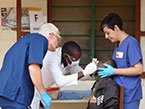
Volunteer dentists and dental nurses spend around two weeks in East Africa where they train and equip health workers to help eliminate dental pain and suffering.
We think Bridge2Aid is a fantastic cause, which is why it’s one of the charities we at The Dental Nurse Network are proud to support.
Their efforts have seen emergency dental care supplied to 3.1 million people in East Africa since 2002, and we want to see this figure rise even more.
If you’re interested in volunteering with Bridge2Aid or would just like to know more about them, you can take a look at their website here.
Dental Mavericks
After a trip to a remote Moroccan fishing village in 2010, Tony and Cally Gedge were shocked by what they saw.
They found a whole community with extremely limited access to dental care and a very real need for help. Many of them were children, and most of their issues were entirely preventable.
Tony and Cally returned home inspired to make a change, and Dental Mavericks was born. Every year since then, the team has headed back to help give these communities the dental care they need.
Each expedition is made up of dentists, nurses and other dental professionals, and they always need more recruits.
They have more information on their site, including testimonials from nurses who have taken part in previous trips. You can find a link here.
Dentaid
More than 90% of the world’s population will experience dental problems in their lifetime, but in many parts of the developing world there’s simply no help available.
Dentaid set out to change that by forming partnerships with communities to provide equipment, training and volunteers.
One of their most successful innovations has been the Dentaid box – literally a portable dental surgery in a wheelie bin. It helps get supplies to where they’re needed most and eliminates the need for people to travel hundreds of miles to receive care.
Dentaid is always looking for more volunteers. With placements available in Cambodia, Uganda, Zimbabwe, Kenya, Malawi and Romania, it’s a fantastic opportunity to see the world and make a difference.
I have been a dental nurse for the past eight years, during which time I have been working in a very busy London dental hospital, Eastman Dental Hospital (EDH). For the last three years I have been teaching major CPD updates to dental nurses.
Many nurses have asked me how it feels to work in a hospital. Quite a few nurses would like to apply for hospital jobs but are afraid that the work might differ too much from work in a dental practice. They are not sure what to expect on the interview day and how challenging it would be to work in such a big dental clinic.
Working in a dental hospital requires good organisation and self-discipline. Every day, the nurses work with different grades of dentist and assist with different procedures. The clinicians working in a hospital range from postgraduate dental students to consultants in charge of an entire department. Every dentist works differently, but most like to have the clinic ready for work before they attend.
Working in a hospital is never boring. On any single day, the procedures undertaken will range from simple check-ups to extraction of the hypoplastic 6’s or surgical removal of impacted canines. Many nurses have a post-registration qualification in sedation so that they can assist with extra sedation clinics and general anaesthesia procedures.
It is very important to follow the cross-infection procedures and medical emergencies updates in order to be able to help in emergency situations. We have to remember that working in a dental hospital can be challenging due to the medical history of many patients. Children may have any of a range of conditions from mild asthma through to autism, cerebral palsy or Down syndrome. Children who have had accidents and trauma to their teeth will most probably be seen in a hospital rather than a dental practice, so assisting a trauma patient brings another challenge to the job.
To give you some ideas about your possible new career path, I would now like to share with you my typical day in a dental hospital.
It is Friday morning and I am starting my regular day in the Paediatrics Department at EDH. It is 8.30am and I am getting ready for my 9am patient.
I gather all the day notes assigned to my dentist and check my day schedule so that I know ahead of time what am I supposed to prepare for today.
My 9am patient will be here for an extraction of two adult permanent teeth, using local anaesthetic. At 10am there is a possible filling with inhalation sedation for a very uncooperative seven-year-old. My 11am patient will be here for a filling, and my patient at midday will be here for root canal treatment.
Following morning clinic, my afternoon will be spent assisting with the surgical procedure of exposure and bond, and undertaking a patient review at 4pm.
After checking my schedule I prepare my kit, put my chair down, clean all the surfaces, and set up the instruments for the first patient. I make sure notes are ready, X-rays are in place, and consent forms for treatment are signed.
My 9am patient arrives ten minutes late, which means there is already pressure on my dentist to keep to time for the rest of the morning. The patient is happy to follow me to the surgery so that we can begin the treatment. However, the patient has had nothing to eat that morning, so I need to assist the patient with a glucose drink. The treatment is completed at around 9.50am. I clean everything necessary and prepare for the inhalation sedation in the specially designated sedation room.
My 10am patient arrives with both her parents, and is already unwilling to come to the surgery. After a short period of time, she is sitting in the dental chair but is still crying. Twenty minutes into the appointment, no treatment has been given, but my dentist and I are both willing to give her some time, and try once more to calm her down. Eventually we manage to introduce her to inhalation sedation, and we polish her teeth. No fillings have been managed, and she will therefore need another appointment to continue with her treatment.
Using my regular kit, I set up again for my 11am patient. This time everything goes smoothly and we are on time for the root canal treatment at midday. But the midday patient does not turn up!
With a spare hour on my hands, I stock up the shelves and drawers with disposable materials, and also make sure that all soap and paper towel dispensers are full for the afternoon.
Between 1pm and 2pm there is a lunch break for the whole hospital. It is time to relax, get some fresh air and catch up with friends from other departments. Lunch time is never long enough, and it seems that the minute we sit down it is time to go back and start the afternoon’s work.
It is now 2pm. My surgical procedure is ready and I look forward to assisting with the exposure and bond procedure. We make sure that everything has been sterilised and that the surgical suction is working. We scrub and also wear gowns to eliminate the possibility of bacterial contamination.
The procedure is finished. The gold chain is attached to the tooth and the patient is discharged.
The last patient of the day needs a simple review. There is very little setting up needed for this, and I therefore have enough time to clean the surgical equipment and send it to the sterilisation unit.
At 5pm it is time to finish for the day. We are all happy to close the department and go home.
I hope that this short introduction to my typical day as a dental nurse in a hospital shows how different and versatile the work can be. On some days I am in charge of the new patient clinic, and on others I spend the day working in general anaesthesia - each week brings new experiences.
I can call myself lucky; I love working with children and I love the challenge of applying the many different procedures and skills I have learned during my years in EDH. Other departments are more specialised and provide treatment for adults and children in orthodontics, root canal, prosthodontics, oral surgery and oral medicine.
The things I like the most about my job include the people I work with, the variety, and the open space. I also like the fact that I can use my skills to help in other departments if there is a shortage of staff.
Working in a hospital can be drastically different from working in a practice. It will take a few days for a newcomer to adjust to the different rules and environment, but there is nothing to worry about. It is never too late to learn and to try a new challenge. I strongly recommend working in a hospital. However, I understand that there are not many jobs around to apply for and that some nurses are more interested in practice jobs and management.
There are several big hospitals in London where you may be able to apply for jobs. These include Eastman Dental Hospital, Guy’s Hospital, King’s College Hospital, Chelsea and Westminster Hospital and The Royal London Hospital.
Applications for jobs can be long and tedious, but we have to remember that they are the first big step towards getting job interviews. Do your best to complete the application with all the details requested. Make sure you include all your dental nursing qualifications and experience. It is very important to make a good first impression. Before the interview, read up on the general rules for infection control, team work and medical emergencies. Demonstrating management skills and good communication will also help to strengthen your application.
If you are thinking of a career change and would like to work in a dental hospital, don’t be afraid - apply as soon as jobs are available. The best link to check for this kind of jobs is NHS jobs: www.jobs.nhs.uk.
I wish you all good luck, hope my article helps a bit, and look forward to hearing about your views and experiences.
Written by Sylvia Rippl, RDN
{fastsocialshare}
News
Most of us have suffered from toothache at some point in our lives. It can be debilitating, constant, and excruciating. It is something we would immediately look to address by reaching for pain relief or booking an urgent visit to the dentist. But for many people, this is not possible; 75% of the world’s population do not have access to a dentist.
Bridge2Aid is working to change this. Through training, the dental charity creates rural-based Health Workers in developing nations, able to provide emergency dental treatment in their communities of approximately 10,000 people each.
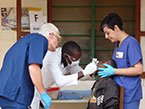
The training is carried out by volunteer dentists and Dental Nurses from the UK and elsewhere during Bridge2Aid’s Dental Volunteer Programme (DVP), who willingly use their skills and experience to help those in need.
Since 2004, Bridge2Aid has trained hundreds of Health Workers in emergency dental care, providing safe and sustainable access to over 3 million people in east Africa alone. The charity has big plans for the future and here at Dental Nurse Network we’re excited to join the Bridge2Aid family and make a lasting change for thousands of people currently living in pain with no hope of treatment.
You should hold a City & Guilds lifelong teaching qualification and one or more extended duties qualifications.
The Dental Nurse Network wants teachers with the ability to inspire and empower our delegates.
We want our nurses to leave empowered with knowledge, and inspired to use it in their everyday lives to develop both professionally and personally.
Successful applicants will need to:
Complete an online 20-minute presentation
Send copies of the following:
CRB
Qualifications
GDC Registration
And supply x2 references (email and telephone numbers)
Teachers working for The Dental Nurse Network can expect to earn £200-£300 per day for teaching. We reward our teachers generously for their time and effort.
If you’re interested in this opportunity please complete the application below, and return it along with your CV to This email address is being protected from spambots. You need JavaScript enabled to view it.

 Indemnity can be an intimidating subject, and many dental nurses are unsure what's required of them. Our easy guide gives you all the information you need to make sure you're covered.
 Have you ever wanted to do more with your qualification? In the first part of our new series on dental charities we look at three organisations that would love to hear from you. As a UK-registered dental nurse you are one of the world’s best-trained dental professionals.
 Most of us have suffered from toothache at some point in our lives. It can be debilitating, constant, and excruciating. It is something we would immediately look to address by reaching for pain relief or booking an urgent visit to the dentist. But for many people, this is not possible; 75% of the world’s population do not have access to a dentist.