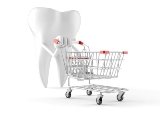
Go to tesco to get your bread, milk and a scale & polish....
Following Sainsbury’s example, Tesco is planning to open the first dental surgery, within a supermarket, in Glasgow, Scotland.
Statistics show that Glasgow have one of the worst records of dental health in Scotland.
Approximately three out of four children, below five years of age,undergo dental treatment including dental extractions and treatment for tooth decay.
Sainsbury’s opened their first dental clinic in store in 2008. Open seven days a week, the surgery has been flooded with patients and was said to be "making dental healthcare more accessible and convenient to better meet patients' needs."
David Gilder, of Sainsbury's, said: "There is a shortage of dental practices in the UK and the launch of this new service goes some way to providing local people with greater access to dental advice and a range of procedures."
Following Sainsbury’s example, Tesco is planning to open the first dental surgery, within a supermarket, in Glasgow, Scotland.
Statistics show that Glasgow have one of the worst records of dental health in Scotland.
Approximately three out of four children, below five years of age,undergo dental treatment including dental extractions and treatment for tooth decay.
Sainsbury’s opened their first dental clinic in store in 2008. Open seven days a week, the surgery has been flooded with patients and was said to be "making dental healthcare more accessible and convenient to better meet patients' needs."
David Gilder, of Sainsbury's, said: "There is a shortage of dental practices in the UK and the launch of this new service goes some way to providing local people with greater access to dental advice and a range of procedures.
News
A dental nurse received damages of £200,000 after contracting occupational dermatitis, caused by the gloves she was wearing.
After working for the NHS for over 30 years she was shocked to have to retire at age 50.
The dental nurse wore powdered and non- powered latex gloves in the surgery. In 2004 she was diagnosed with her condition by her doctor. She initially went to see her doctor in 2003, complaining of itchy wrists.
'Caroline Bedale, UNISON Branch Secretary, said: “Latex products are a known danger to dental and other healthcare workers because they are at increased risk of latex allergy. This case demonstrates the critical importance of all employers having proper policies, not only to protect staff from developing latex allergy, but also for the safe handling of patients with known or suspected latex allergy.”¹
'Commenting, the woman’s representative at Thompsons Solicitors, Imogen Wetton, said: “The impact of a latex allergy causes no end of difficulties for sufferers. My client cannot wear jewellery with nickel in it, nor can she wear any clothes with metal zips. She has to avoid any rubber handled items and wear cork inner soles. She has to sleep with cotton gloves on and has to regularly apply steroid creams. She has to avoid washing up and ironing. She can’t even use the TV remote control as it has rubber buttons. The list goes on and on and it’s a living nightmare for sufferers.'²
A dental nurse received damages of £200,000 after contracting occupational dermatitis, caused by the gloves she was wearing.
After working for the NHS for over 30 years, she was shocked to have to retire at age 50.
The dental nurse wore powdered and non- powered latex gloves in the surgery. In 2004 she was diagnosed with her condition by her doctor. She initially went to see her doctor in 2003, complaining of itchy wrists.
'Caroline Bedale, UNISON Branch Secretary, said: “Latex products are a known danger to dental and other healthcare workers because they are at increased risk of latex allergy. This case demonstrates the critical importance of all employers having proper policies, not only to protect staff from developing a latex allergy, but also for the safe handling of patients with known or suspected latex allergy.”¹
'Commenting, the woman’s representative at Thompsons Solicitors, Imogen Wetton, said: “The impact of a latex allergy causes no end of difficulties for sufferers. My client cannot wear jewellery with nickel in it, nor can she wear any clothes with metal zips. She has to avoid any rubber handled items and wear cork inner soles. She has to sleep with cotton gloves on and has to apply steroid creams regularly. She has to avoid washing up and ironing. She can’t even use the TV remote control as it has rubber buttons. The list goes on and on, and it’s a living nightmare for sufferers.'²
Dental nurses, its time to look after your posture at work.
Seven out of 10 people will experience back pain at some time in their life. However, being a dental nurse puts you at increased risk of this.
Ongoing research dating back to 1945 finds that the most common hazards relating to dentistry are
Back pain (44%)
Muscle aches (33%)
Neck pain (28%)
More worryingly, a massive 81% of dental hygienists suffer back pain. In America, one fifth of every dental hygienist that has left the industry cites physical disability arising from work as a reason.
With this is mind we surveyed members of our dental nurse facebook group. Over 40 dental nurses responded in just one day indicating that they were affected by back pain, commonly in the lower back; some reporting more serious issues including:
Permanent curvature of the spine
Compressed discs
Scoliosis
Why does dental nursing cause back pain?
Most of the respondents to our survey attributed their back pain to holding awkward positions for long periods of time. This results in muscle fatigue, eventually leading to wear and tear.
Another factor which is not often considered is the design of seating usually available to dental nurses.
Traditionally, people have been encouraged to sit in an upright position, with hips at a 90 degree angle. Not only does this cause unnecessary pressure on thighs and hips, it also does not allow for the fluidity of movement often needed during surgery.
Being seated in this way can reduce circulation in the lower half of the body and may increase your risk of:
Cellulite
Varicose veins
Swollen feet
What can I do to stop this from happening?
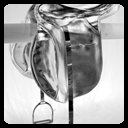
Some dental nurses responding to our survey recommended the use of a saddle chair. Saddle chairs encourage users to sit in a equestrian position (as if they are riding a horse) and mean their hips are at a 135 degree angle with legs further apart resulting in less pressure on the thighs and buttocks. The spine is also at its most natural position.
All though sitting in this way takes some getting used to, benefits are seen almost immediately and you will find you have:
Improved circulation in the lower half of your body
Reduced muscle tension
The ability to move around more freely owing to the wheeled castors
The ability to adapt the seating to work at standing height comfortably
There are two type of saddle chairs available; Solid (when the seat is whole) and divided (where there is an adjustable gap between the two seating parts). Divided saddle chairs reduce pressure and temperature in the buttock region, and are said to be more comfortable and healthier for men than a solid seat.
Saddle chairs vary in price and can be found as cheaply as £57.00 from a variety of stockists.
If you are finding that you are having back pain resulting from your work environment, you should discuss this with your employer immediately. Employers have a legal obligation to protect the health and safety of their employees who might be affected by what they do. Management of Health and Safety at Work Regulations 1999 regulation 3 requires that all employers assess the risks to the health and safety of their employees while they are at work.
What else can I do to alleviate my back pain?
There are many options that can be taken to relieve the symptoms of back pain, but remember unless you make changes to the posture and seating you have at work, the back pain will soon return and may be worse.
Be wary of taking pain killers, particularly strong ones, as they can be addictive and simply mask pain rather than deal with the route cause of it.
If you do have a health plan, make sure that you take advantage of any treatments that are available under it including physiotherapy, osteopathy and chiropractics. If not try the following:
Try to keep as active as possible. Although it may be painful at first, it will reduce your chances of getting back pain in the future.
Apply a hot water bottle or heat pack to the affected area as often as possible to help relax the muscles
Try a cold compress such as a bag of frozen peas wrapped in a towel
If you are into complementary therapies; acupuncture, herbal remedies and massage are reported to have great benefits and can sometimes be prescribed by your GP.
If you have any other practical advice that you would like to share with dental nurses regarding back pain, why not make a post in our forum or join our facebook group. We believe that sharing experiences and practical solutions with each other is the best way to empower dental nurses across the country.


 Go to tesco to get your bread, milk and a scale & polish....
 Seven out of 10 people will experience back pain at some time in their life. However, being a dental nurse puts you at increased risk of this.