National Smile Month is a long-running campaign organised by the Oral Health Foundation (a UK-based charity) with the aim of promoting good oral health worldwide. This year’s campaign is approaching quickly – it runs from 17th May to 17th June 2021.
As healthcare professionals, taking part in this amazing campaign alongside other organisations gives us an opportunity to help raise awareness of the importance of good oral health and to promote the benefits of having a healthy smile – including improving mental wellbeing and physical health. I’m sure this is a big part of the reason many of us chose a career in dentistry!
The campaign’s three key messages for maintaining a healthy mouth are:
Brush your teeth last thing at night and on at least one other occasion with a fluoride toothpaste.
Clean between your teeth every day.
Cut down on how much and how often you have sugary food and drink.
Visit your dentist regularly, as often as they recommend.
National Smile Month gives us the opportunity to educate and motivate people, teaching them the importance of good oral health. We can do this by:
Giving oral health instruction, for example by visiting local schools and groups.
Holding oral health workshops.
Holding oral health awareness events.
Displaying oral health posters, educational materials and leaflets around the dental practice.
All of this helps to improve quality of life for others. What more can I say? The rewards from participating in National Smile Month are endless; they give us the chance as healthcare professionals to reach out to our local community and make a difference by delivering important oral health messages – and to have fun whilst doing so.
To be part of National Smile Month, you can visit the campaign website at www.nationalsmilemonth.org. The website provides information on the different ways we can be involved (such as through fundraising events, social media and donations) and about the life-changing work of the Oral Health Foundation.
News
New data reveals potential devastating impact on head and neck cancer patients.
At the peak of the first lockdown, there was a 59% drop in urgent referrals for people with a suspicion of head and neck cancer.
Devastating impact on projected five-year survival for people with head and neck cancer.
Pre-COVID projected 5 year survival of 47% will potentially drop to 43% of head and neck cancer patients.
This could lead to an additional 451 deaths in people with head and neck cancer.
A leading head and neck cancer charity is warning that hundreds of people are potentially at risk of dying unnecessarily over the next five years if the Government does not get a grip of how to treat people with other life-threatening illnesses alongside COVID-19.
New data, from DATA-CAN: The Health Data Research Hub for Cancer and collaborators on behalf of the Swallows Head and Neck Cancer Charity, has shown that progress in projected five-year survival from head and neck cancer could be set back significantly and have a devastating impact on patients. It could potentially lead to an additional 451 deaths as a direct and indirect result of COVID-19.
The statistics have sadly been backed up by families who have experienced first-hand the effects of losing a loved one to head and neck cancer during the current pandemic.
Mark Jordan, lost his lifelong friend and work colleague, Roger, 60, a plumber from Blackpool, to mouth cancer, just before Christmas. “In February 2020, Roger started feeling a dull pain towards the back of his mouth, so he booked a dentist appointment. He was seen and referred to Blackpool Victoria Hospital, where he had an X-ray mid-March, just before lockdown. Roger had a dental follow-up check cancelled during the first lockdown. He was still in pain and chased up the results but was told all non-essential consultations were on hold. The pain was getting worse, so he went to A & E twice.
“While X-rays were taken, he wasn’t seen as a priority and didn’t get answers. By August, he could feel a lump the size of a thumbnail in his mouth. At the start of September, he finally got an appointment with a plastic surgeon at the Royal Preston Hospital. Scans showed he had an aggressive tumour. In September Roger was diagnosed with advanced mouth cancer and told he had just 6 weeks to live. “We will always wonder if the pandemic hadn’t happened and Roger had received his treatment on time he would still be here”.
Chris Curtis, Founder Swallows Head and Neck Cancer Charity said, “The impact of coronavirus on all head and neck cancer patients is alarming. In 2020, there was a drastic reduction in suspected head and neck cancer referrals compared to 2019 figures. If this continues, it could have a devastating effect on five-year survival rates and potentially lead to hundreds of extra deaths. We are also seeing additional deaths like Roger that might have had a different outcome if they received their treatment without delays and cancellations due to COVID-19.”
Over the course of the UK lockdown between March and May 2020, DATA-CAN and partners collected and analysed ‘real-time’ data from UK cancer centres. These data provided a valuable insight into the effects of the COVID-19 pandemic on all cancer patients and cancer services. The research found:
A decline in urgent referrals for cancer (70 per cent decrease) during the initial lockdown
A decline in chemotherapy attendances (40 per cent decrease) during the initial lockdown
For certain cancers, these declines had only partially recovered.
The researchers have now looked in detail at the impact on head and neck cancers and found that, at its worst, there was a drop of nearly 60 per cent in urgent referrals for a suspicion of head and neck cancer during the first lockdown. This meant that 6 out 10 people who had symptoms potentially indicating head and neck cancer were not being referred to a specialist to investigate further.
Estimates suggest that this could have a devastating impact on five-year survival for people with head and neck cancer. Pre-COVID, around 47 per cent of people with head and neck cancer would be projected to survive for five years or more. This figure could now drop to 43 per cent which could potentially lead to an additional 451 deaths in people with head and neck cancer as a result of the pandemic.
Professor Mark Lawler, DATA CAN’s scientific lead and Professor of Digital Health at Queen's University Belfast, said, “Our research shows that there have been significant diagnostic and treatment delays as a result of the COVID-19 pandemic for people with all cancers and the data we show today for head and neck cancer is particularly worrying. Whilst we have seen some positive recovery in urgent referrals and chemotherapy appointments, it may be that just getting back to pre-COVID-19 levels will not be enough. We may need to be operating at 130 per cent of pre COVID-19 levels to address the backlog, the missing diagnoses, and the delayed treatments for people with cancer. We’ve done so well to improve cancer outcomes in the UK in the last decade. Let us make sure that 10 years progress isn’t wiped out in 10 months.”
Consultant Oral Maxillofacial Surgeon and Mouth Cancer Foundation Ambassador, Mahesh Kumar, who works at Northwick Park Hospital, London added “We saw a drop in cases during the lockdown months, and I now have patients who are presenting at a more advanced stage, (stage 4), of the disease, which is far more distressing for everyone. We will not know the full impact for a few years, but I imagine the statistics for head and neck cancer deaths will keep rising.”
INTERVIEWS, VIDEO & IMAGES AVAILABLE
Chris Curtis – Survivor & Founder Swallows Head and Neck Cancer Charity
Mark Jordan – Lifelong friend of Roger Maymann who passed away from mouth cancer in December 2020.
Professor Mark Lawler – DATA CAN’s scientific lead and Professor of Digital Health at Queen's University Belfast
Mahesh Kumar, Consultant Oral Maxillofacial Surgeon and Mouth Cancer Foundation Ambassador, works at Northwick Park Hospital, London
To set up an interview and for more information please call
+44 (0) 7779 169 833
Or This email address is being protected from spambots. You need JavaScript enabled to view it.
For general press enquiries, please contact:
Chris Curtis
+44 (0)7779 169 833
This email address is being protected from spambots. You need JavaScript enabled to view it. or This email address is being protected from spambots. You need JavaScript enabled to view it.
Swallows Head and Neck Cancer Charity – www.theswallows.org.uk
The Swallows Charity supports all people affected by head and neck cancers, patients, caregivers, friends, or relatives. The patient is the focus for support, help and signposting, however the role of caregiver and others is vital too, with their own support needs often overlooked. It is our intention for every person affected by head and neck cancer to have access to support at the point they need it and by the method off their choice on a 24/7 basis. This could be by telephone, email, or social media.
The Swallows Charity have expanded our global reach and provide resources to enable 24/7 support to be freely available to all people affected by head and neck cancers.
Mouth Cancer Foundation – www.mouthcancerfoundation.org
The Mouth Cancer Foundation is a registered charity no. 1109298.
The Mouth Cancer Foundation is a charity dedicated to raising awareness and support for those suffering from or at risk of mouth cancer, throat cancer and other head and neck cancers, as well as providing assistance and information on living with mouth cancer for families, friends and carers. The promotion, protection and education of good health is key to raising awareness of mouth cancer. The charity aims to inform the public about the signs, symptoms, facts and figures and key causes of mouth cancer. Know what increases your risk of getting the disease including information on HPV, alcohol and smoking.
DATA CAN - www.data-can.org.uk
DATA-CAN is the UK’s Health Data Research Hub for Cancer, making high quality health data more accessible for cancer researchers and health professionals, to help improve cancer services and patient outcomes.
In the UK, over 400,000 new cases of cancer are diagnosed each year, with one in two people facing a cancer diagnosis in their lifetime. A lot of health data about each and every one of us is collected, but this data is not always quick and easy for researchers to find, access and analyse.
Better access to quality health data can help researchers develop improved cancer treatments, support the NHS to make positive changes to cancer services and give patients faster access to clinical trials. Improving access to cancer data for research is crucial to improving cancer services and outcomes for cancer patients.
DATA-CAN is a UK wide partnership of six founding organisations - Genomics England, IQVIA, Queen’s University Belfast, The Leeds Teaching Hospitals NHS Trust, UCL Partners, University of Leeds.
Data referred to in this work were contributed by:
Prof Mark Lawler, DATA-CAN: The Health Data Research Hub for Cancer and Queen’s University Belfast
Prof Clare Turnbull, Professor of Translational Cancer Genetics, Institute of Cancer Research
UCL Institute for Health Informatics
Carnall Farrar (CF)
News
Katie is a trainee dental nurse who joined her dental practice in March 2020 – just a few weeks before ‘Lockdown 1’. Here we speak to Katie about her experiences as a trainee dental nurse in the current ever-changing dental world. It's amazing what a positive attitude she still has towards her role – she is a true inspiration to us all.
How did you end up taking on the role of a trainee dental nurse?
I was looking for a new job that would be more of a career, as I was working in retail at the time. I saw this job advertised, and a family member who works in the industry suggested they thought it would be a good fit for me.
How did ‘Lockdown 1’ affect you and your training?
Well, I was made redundant – I had only been in the role about two weeks, so I was not able to be furloughed. I wasn’t able to continue training as initially planned, so it delayed the learning aspect of my job.
How did you feel about coming back to work in June?
What I was allowed to do was vastly restricted when we first got back, although it was a relief to be back at work and to have some sense of ‘normal’. It was very stressful because I had only spent a small amount of time at the practice before lockdown. I had to relearn everything again, which added extra pressure during what was already a stressful time not just for me but for the whole team. It initially felt like quite a risky place to be due to the nature of the job. However, that has eased now that we have a routine and all the PPE.
Are you still able to enjoy working as a trainee dental nurse?
Yes, I am still able to enjoy dental nursing. It is made harder by having to wear PPE all day and having the extra procedures. But overall, it is still enjoyable and it is nice to be able to see patients – especially if they haven't been anywhere for a while, as you can have a conversation with them in a safe environment, which they seem to like.
Once you are qualified, are there any other courses you would like to do to develop your role in the dental industry?
For now, the focus is just on dental nursing, but I would be interested in eventually looking into a hygiene course. Most hygienists have recommended it as a way to progress that they have enjoyed.
News
“Coronavirus has inspired us to get creative with the 15th Mouth Cancer 10 KM Awareness Walk, which is the only walk for mouth cancer anywhere in the world. This is the walk for the dental profession and we’re hoping many dental practices up and down the country sign up to take part and make this the largest walk to date”.
Dentist and Mouth Cancer Foundation President, Dr Philip Lewis
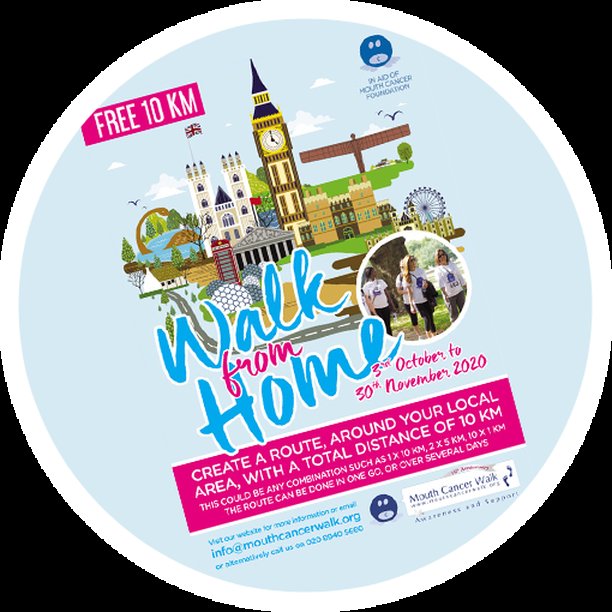
As the Mouth Cancer 10 KM Awareness Walk is forced to take place in a different format this year, walkers are invited to complete the event from the convenience of their own front door.
Participants can walk a total of 10 K, as many times as they like, on their own or with family, friends, colleagues and pets, around their own home, garden or local area! The walk from one of the UK’s leading mouth cancer charities, the Mouth Cancer Foundation, encourages as many people as possible to take part in this FREE 10 KM event between Saturday 3rd October and Monday 30th November 2020. This year we are holding the walk throughout Mouth Cancer Action Month to raise as much awareness as possible.
So far, dental practices are walking in small groups, individuals have set themselves the challenge of 10 K a day for the duration of the walk and the Jones family from Shropshire aim to use the time to walk a combined distance of 334 miles. The return distance from their home in Bayston Hill to Hyde Park in London where the walk is usually held. Kevin Jones, is leading the family ‘Walk For Clare’ event in memory of his sister Clare Jones who sadly passed away from tongue cancer in 2007 at the age of just 23 years old.
It is a fantastic opportunity to open up the 10 KM walk to more people than ever before. The Mouth Cancer 10 KM Awareness Walk is designed to increase awareness of mouth and all head and neck cancers. It is also an opportunity to celebrate survivorship and raise funds to continue to support patients, carers and survivors coping with mouth cancer.
To take part simply create a route, around your local area, with a total distance of 10 KM. This could be any combination such as 1 x 10 KM, 2 x 5 KM, 10 x 1 KM. The route can be done in one go, (10 KM is approximately 12500 steps and takes about one and a half to two hours to complete), or over several days. Ideally this is a walk, but if you wish to run, walk backwards, hop, skip etc that is fine. The choice is yours! Just send us your photos and tag us in on social media.
For more information and to register visit www.mouthcancerwalk.org/register.
For general press enquiries, please contact:
Elizabeth Ayto Laverack
+44 208 940 5680
This email address is being protected from spambots. You need JavaScript enabled to view it.
Mouth Cancer Foundation – www.mouthcancerfoundation.org
The Mouth Cancer Foundation is a registered charity no. 1109298.
The Mouth Cancer Foundation is a charity dedicated to raising awareness and support for those suffering from or at risk of mouth cancer, throat cancer and other head and neck cancers, as well as providing assistance and information on living with mouth cancer for families, friends and carers. The promotion, protection and education of good health is key to raising awareness of mouth cancer. The charity aims to inform the public about the signs, symptoms, facts and figures and key causes of mouth cancer. Know what increases your risk of getting the disease including information on HPV, alcohol and smoking.
About Mouth Cancer
Mouth Cancer is the general term given to the variety of malignant tumours that develop in the mouth, (oral cavity). The Mouth Cancer Foundation promotes awareness of all head and neck cancers i.e. throat, (pharynx), voice box (larynx), salivary glands, nose, paranasal, sinuses, lips and skin.
1 person every 3 hours is lost to mouth cancer.
Over 8300 new cases in the UK each year.
Each year over 2700 lives are lost to mouth cancer.
Worldwide mouth cancer affects 6500,000 per year.
Mouth cancer is twice as common in men as women.
75% of cases occur in the over 55 age group.
Detected early there is an excellent chance of complete cure!
Oral cancers are often painless so in addition it is important to be aware of the general signs and symptoms of mouth cancer which include:
An ulcer or white or red patch anywhere in the mouth that does not heal within 3 weeks.
A lump or swelling anywhere in the mouth, jaw or neck that persists for more than 3 weeks.
Difficulty in swallowing, chewing or moving the jaw or tongue.
Numbness of the tongue or other area of the mouth.
A feeling that something is caught in the throat.
A chronic sore throat or hoarseness that persists more than 6 weeks.
Unexplained loosening of teeth with no dental cause.
Risk Factors include:
Tobacco use is considered the main cause of mouth cancer.
Drinking alcohol regularly, especially spirits, increases the risk four-fold.
Drinkers and smokers are 30 times more likely to develop mouth cancer.
Poor diet and social deprivation is linked to a third of all cancer cases.
The Human Papilloma Virus (HPV), transmitted through oral sex, could overtake tobacco and alcohol as the main risk factor within the next decade. It is already accounting for many new cases in women and the young who traditionally were unlikely to get the disease.
Exposure to the sun is a cause of skin cancer which can affect the lips and face.
More information about Mouth Cancer is available at the Mouth Cancer Foundation web site www.mouthcancerfoundation.org or by emailing This email address is being protected from spambots. You need JavaScript enabled to view it.
News
Due to the effects of Covid-19 or coronavirus on dental practices, DNN is offering a free six-month extension on the completion of record of competence assessments and IPC lead assessments to all students who started any DNN certificate course* between January 2020 - June 2020.
Please note that this free extension does not include access to the online learning or online quizzes and you should complete the online learning and download any necessary documents before the course expires online.
* This excludes the NEBDN oral health education course, as the assessment cut-off dates are set by NEBDN. NEBDN have given new cut-off dates which have been emailed to all students.


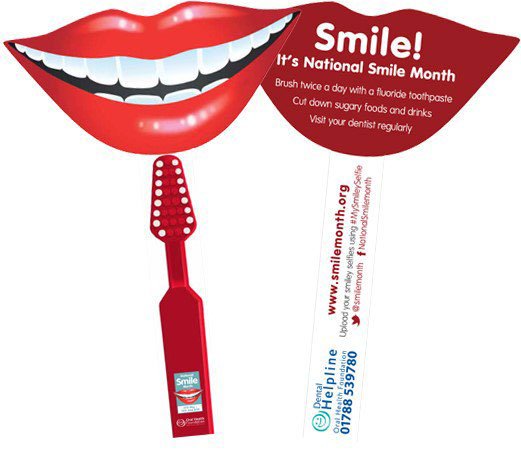 National Smile Month is a long-running campaign organised by the Oral Health Foundation (a UK-based charity) with the aim of promoting good oral health worldwide. This year’s campaign is approaching quickly – it runs from 17th May to 17th June 2021.