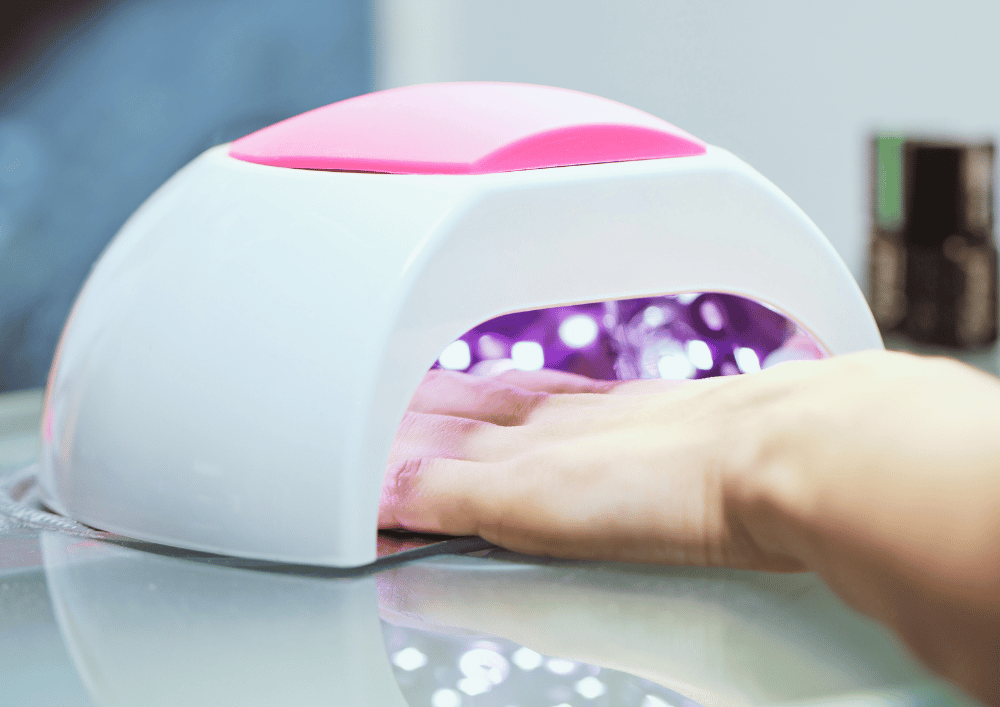
 The question of gel nails often arises among dental nurses, particularly when a special occasion is coming up and you start to wonder whether having your nails done would really make a difference at work. Alongside this, there is a growing amount of mixed messaging. Some dental professionals and educators suggest that the CQC takes a more relaxed approach, while online forums and discussions include reports from dental managers who say their practices allow short gel nails under local policy. With so many conflicting views circulating, it can be difficult to know which information is reliable and what guidance should actually be followed.
What does the research say?
You will find plenty of online articles warning that gel nails may harbour more bacteria than natural nails. This caution is often linked to earlier studies examining how effectively different nail types respond to hand hygiene.
A 2018 study involving 88 healthcare workers found that while alcohol hand gel reduced bacterial burden on natural nails and standard nail polish, this reduction was not observed on gel-polished nails. Importantly, the study did not demonstrate a higher overall bacterial burden on gel nails. Instead, the authors concluded that gel polish may be more difficult to clean effectively using alcohol hand gel.
However, more recent research paints a more nuanced picture. A prospective study conducted in 2023 and published in the Journal of Hospital Infection in 2025 followed 46 healthcare workers over 21 days, comparing gel polish, standard polish and unpolished nails, with nail length kept at 2 mm or less.
The study found important differences between polish types. Standard nail polish was consistently associated with a higher bacterial burden than both gel polish and unpolished nails at multiple time points, both before and after hand hygiene.
In contrast, gel ail polish was not associated with a higher bacterial burden than unpolished nails within three weeks of application. By day 21, prior to hand hygiene, gel-polished nails did not show a higher bacterial burden than unpolished nails.
The available evidence is limited and difficult to compare directly due to differences in study design, definitions of nail coatings, and hand hygiene protocols.
But what do the regulations actually say?
HTM01-05 guidance remains clear on this matter. Section 6.8 states:
“Fingernails should be kept clean, short and smooth. When viewed from the palm side, no nail should be visible beyond the fingertip. Staff undertaking dental procedures should not wear nail varnish and false fingernails.”
Section 6.23 reinforces this by explaining that long or false nails may damage gloves, which are your primary barrier against cross-contamination.
But the Health and Social Care Act 2008: Code of Practice on the Prevention and Control of Infections guidance also states:
“Registered providers are free to decide to use alternative approaches but should be prepared to justify to the CQC how the chosen approach is equally effective or better in ensuring that the criteria are met. Providers of regulated activities need to recognise that effective management of IPC is an important service-user safety issue.”
And the official government guidance on the code states:
“The law states that the code must be taken into account by the Care Quality Commission (CQC) when it makes decisions about registration and that providers must have regard to the code when deciding how they will meet the regulations. However, the code is not mandatory, so registered providers do not by law have to comply with the code. A registered provider may be able to demonstrate that it meets the regulations in a different way (equivalent or better) from that described in this document.”
Practices are expected to follow HTM 01-05 as the default standard; however, where a provider chooses to depart from it, that decision must be made at practice level, supported by documented risk assessment, and justified to the CQC as being equally effective or safer. In practice, this justification should be based on a balanced review of the wider body of available evidence, rather than relying on individual studies in isolation. Responsibility for making, evidencing, and defending that decision sits with the provider. Until guidance such as HTM 01-05 is formally updated, it remains the benchmark against which compliance will be judged.
So what does this actually mean for dental nurses?
The evidence base is evolving, and research published in 2025 suggests the risks associated with gel polish on short, intact nails may be lower than previously thought. However, this evidence alone does not change national guidance. HTM 01-05 remains the recognised best-practice standard for dental settings.
Where a practice has formally reviewed the evidence, completed a documented risk assessment, and agreed a local policy that departs from HTM 01-05, dental nurses may follow their practice policy, as the responsibility for that decision sits with the provider. In the absence of such a formally agreed policy, HTM 01-05 should be followed as the default standard.
For dental nurses, the key point is clarity: follow written practice policy, understand who holds responsibility for deviations from national guidance, and avoid relying on informal advice or assumptions.
Infection prevention will always take priority, but it is reasonable to hope that research continues to evolve alongside modern products and practices. Further high-quality studies could help clarify whether current guidance remains proportionate, particularly where emerging evidence suggests that short, intact gel-polished nails may not carry the risks once assumed.
References
Arreba, P., Iglesias, J., Ríos, J., Herrera, S., Marco, D.N. and Montoya, M. et al. (2025) Gel nail polish does not have a negative impact on the nail bacterial burden nor on the quality of hand hygiene with an alcohol-based hand rub. Journal of Hospital Infection, 157, pp. 40–44. Available at:
https://www.journalofhospitalinfection.com/article/S0195-6701(24)00408-0/abstract
https://www.sciencedirect.com/science/article/abs/pii/S0195670124004080
Care Quality Commission (2024) Regulation 12: Safe care and treatment. Available at:
https://www.cqc.org.uk/guidance-regulation/providers/regulations-service-providers-and-managers/health-social-care-act/regulation-12
Hewlett, A.L., Hohenberger, H., Murphy, C.N., Helget, L., Hausmann, H., Lyden, E., Fey, P.D. & Hicks, R. (2018) Evaluation of the bacterial burden of gel nails, standard nail polish, and natural nails on the hands of health care workers. American Journal of Infection Control, 46(12), pp. 1356-1359. doi:10.1016/j.ajic.2018.05.022
NHS England (2013) HTM 01-05: Decontamination in primary care dental practices. Available at:
https://www.england.nhs.uk/wp-content/uploads/2021/05/HTM_01-05_2013.pdf
UK Government (2022) Health and Social Care Act 2008: Code of Practice on the prevention and control of infections and related guidance. Available at:
https://www.gov.uk/government/publications/the-health-and-social-care-act-2008-code-of-practice-on-the-prevention-and-control-of-infections-and-related-guidance